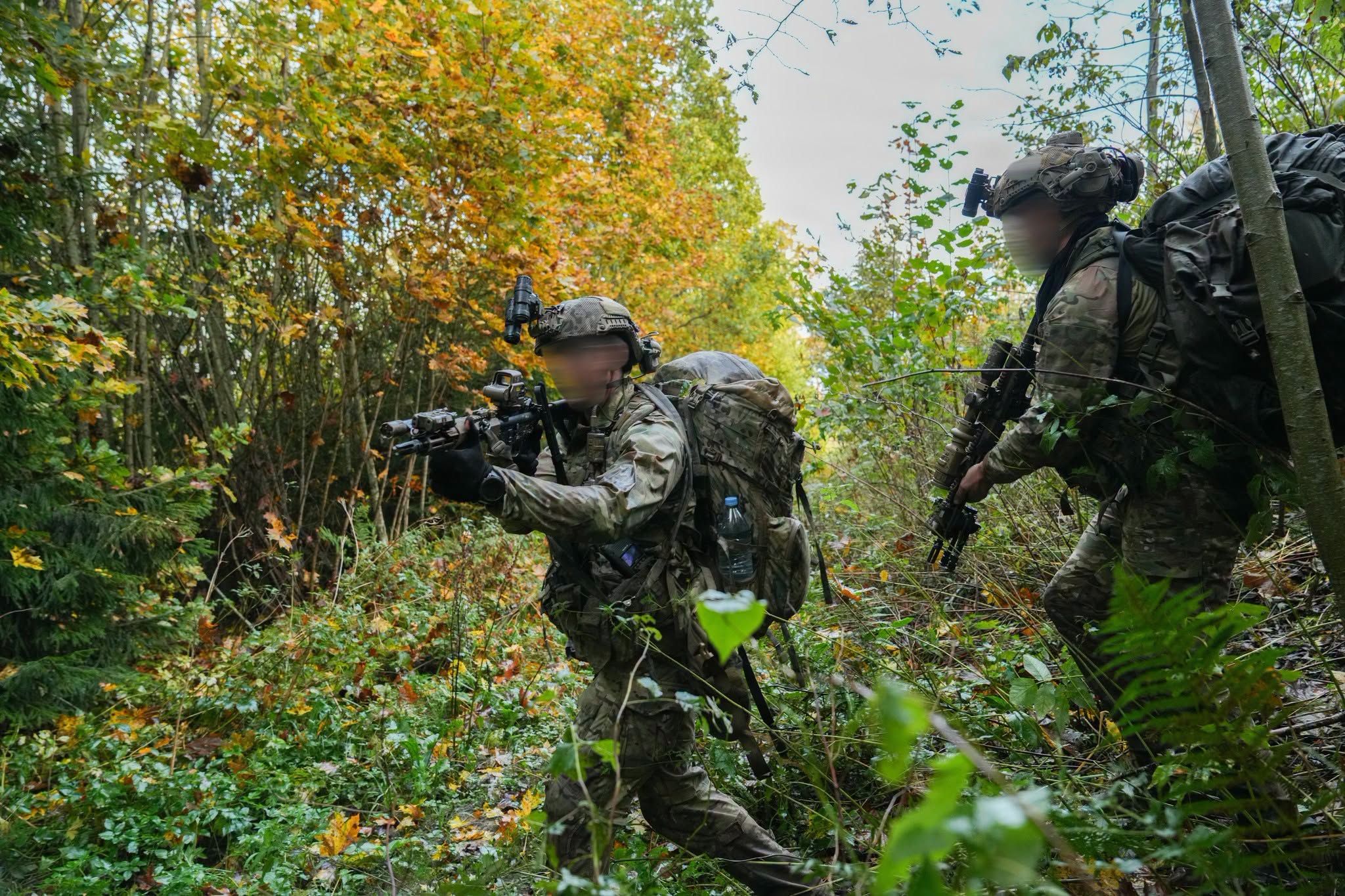
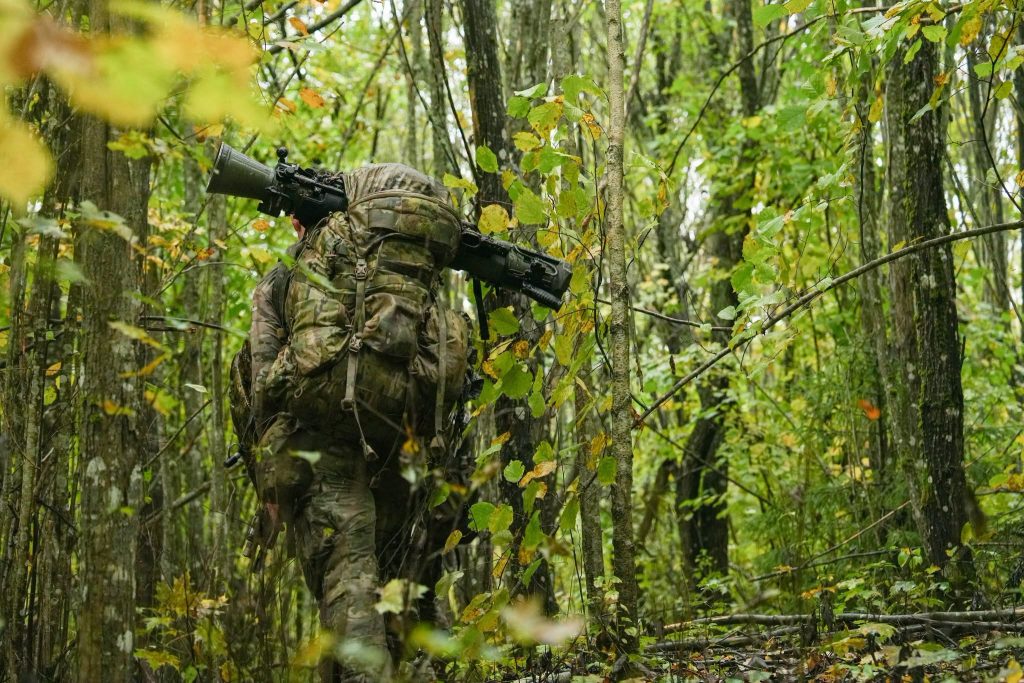
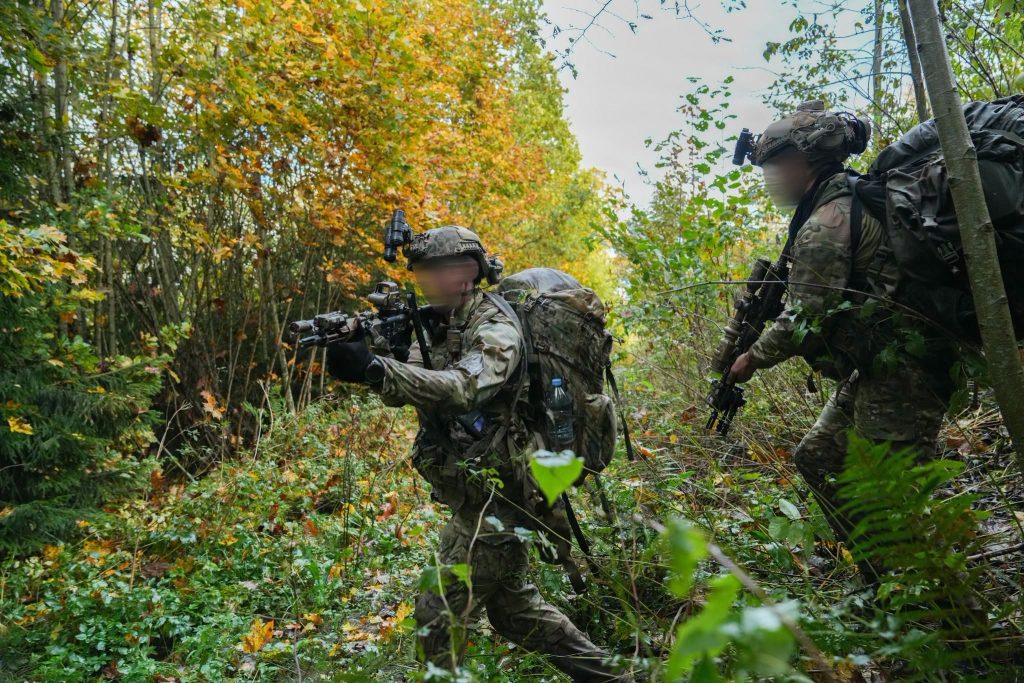
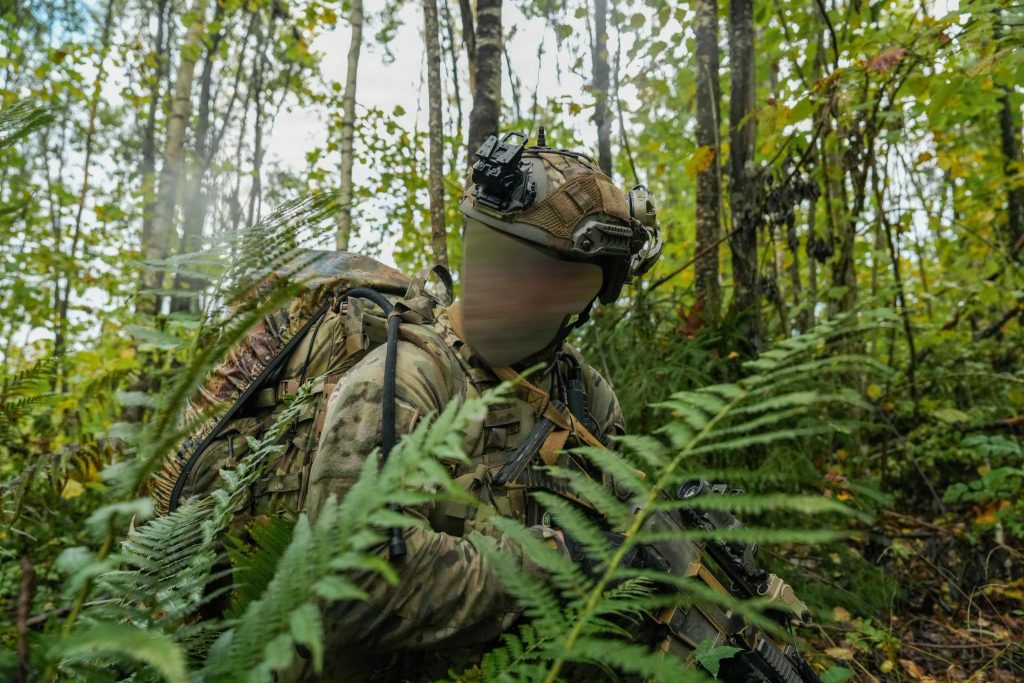
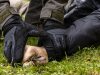
U.S. Army Green Berets assigned to the 10th Special Forces Group (Airborne) conduct dismounted movement alongside members of the Latvian Special Operations Unit during a bilateral training exercise in Latvia, October 2026. The training strengthened interoperability and collective readiness by allowing U.S. and Latvian special operations forces to rehearse movement, communication and tactical procedures in rural terrain as part of a simulated deep-strike mission. (U.S. Army photo by Sgt. Oniel McDonald).
For Latvian and U.S. Special Operations Forces, a simulated deep-strike mission in rural terrain provided an opportunity to put that coordination into practice.
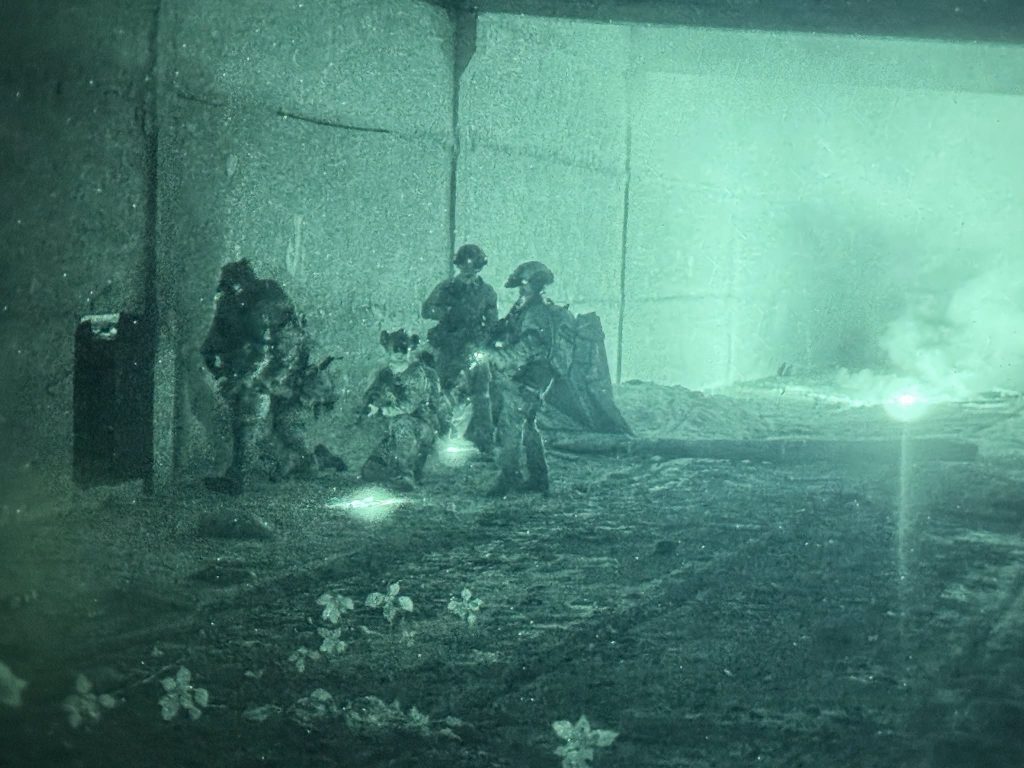
U.S. Army Green Berets assigned to the 10th Special Forces Group (Airborne) conduct a simulated nighttime raid alongside members of the Latvian Special Operations Unit during bilateral training in Latvia, October 2026. The training strengthened interoperability and collective readiness by allowing U.S. and Latvian special operations forces to rehearse coordinated actions, communication and decision-making under limited-visibility conditions. (U.S. Army photo by Sgt. Oniel McDonald).
Training side by side, the teams worked through shared procedures while maintaining movement and communication as daylight faded. The transition into darkness added another dimension to the exercise, requiring the personnel involved to stay aligned as visibility changed.
For multinational SOF, working together means understanding how partner units communicate and operate. Joint training gives teams the opportunity to apply common procedures, build familiarity, and develop the working relationships that support coordinated action.
The simulated mission provided a shared setting for that work. As the exercise continued into the night, the focus remained on keeping the teams connected and their actions coordinated throughout the changing conditions.
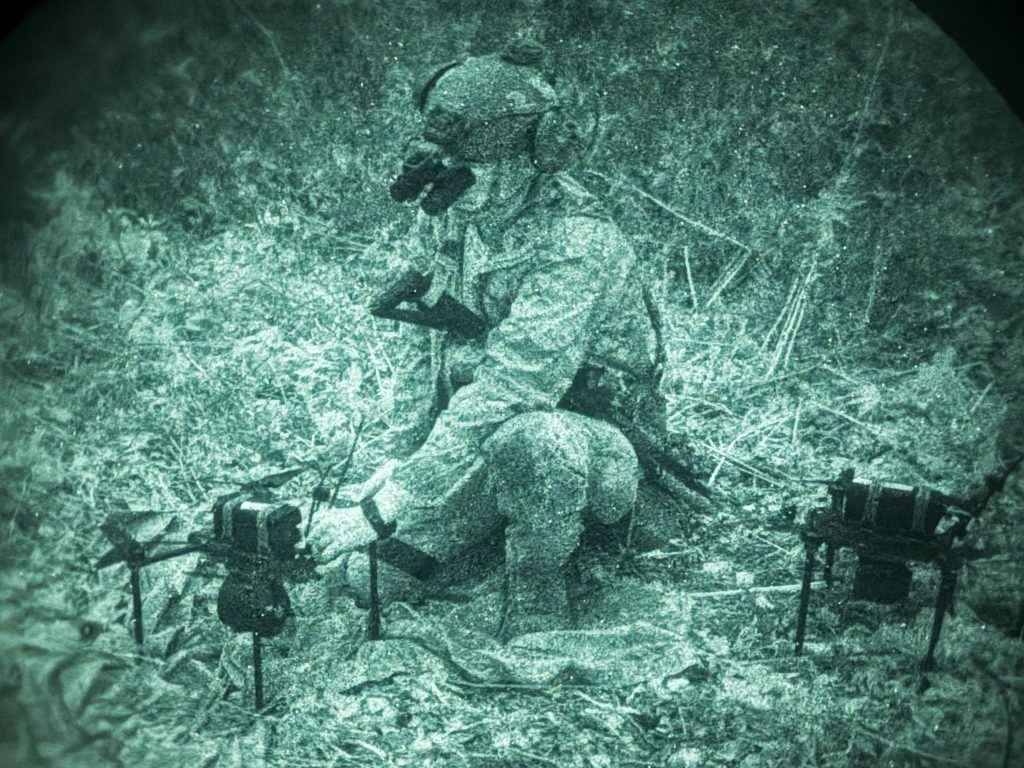
A U.S. Army Green Beret assigned to the 10th Special Forces Group (Airborne) deploys an unmanned aircraft system during nighttime bilateral training with members of the Latvian Special Operations Unit in Latvia, October 2026. Nighttime drone deployment allowed the team to rehearse launch procedures and employment in limited-visibility conditions while maintaining operational awareness and supporting mission execution during the simulated deep-strike exercise. (U.S. Army photo by Sgt. Oniel McDonald).
The accompanying images offer a closer look at the personnel and rural environment involved in the exercise. They capture moments from the training and give an impression of the conditions in which Latvian and American SOF worked together.
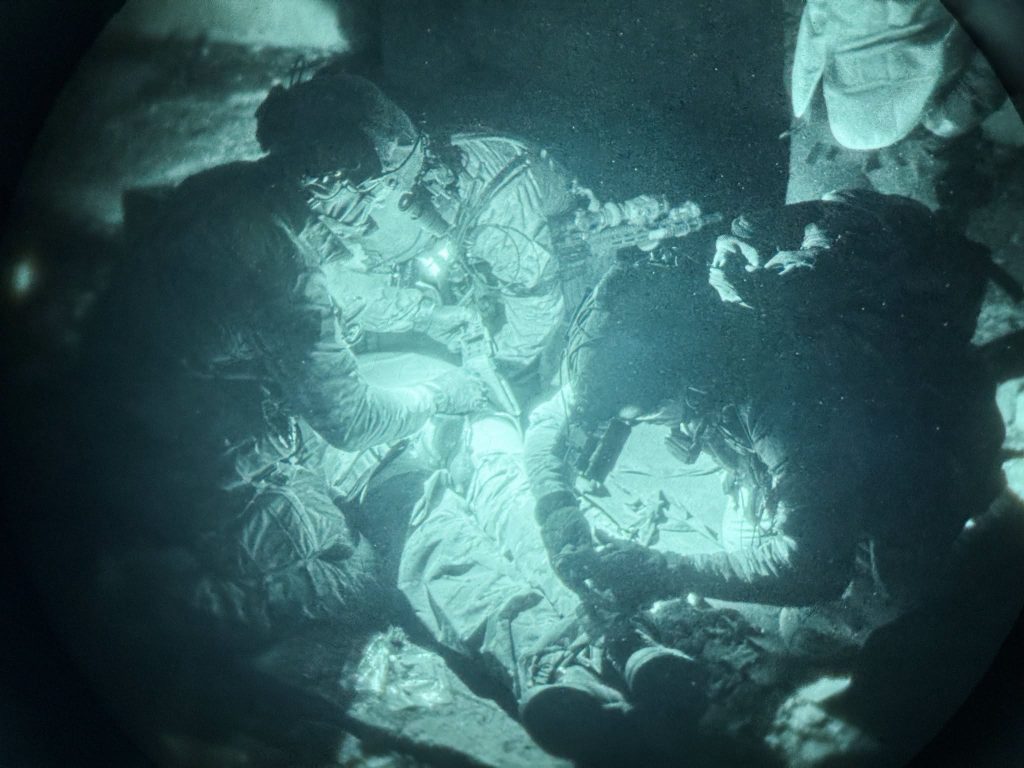
U.S. Army Green Berets assigned to the 10th Special Forces Group (Airborne) and members of the Latvian Special Operations Unit provide Tactical Field Care to a simulated casualty before conducting a casualty evacuation during a bilateral training in Latvia, October 2026. The scenario tested the teams’ ability to assess, stabilize and evacuate a casualty under realistic conditions while strengthening medical readiness, communication and interoperability between U.S. and Latvian special operations forces. (
Exercises like this contribute to Allied readiness by giving partner forces practical experience alongside one another. Every opportunity to train together helps strengthen the coordination they may need when called upon.
We use cookies to ensure that we give you the best experience on our website. If you continue to use this site we will assume that you are happy with it.